Oh I see, sorry - in this case it’s a matter of training, not breeding, so that’s not really a concern. Unless they develop some kind of extremely high-pitched mosquito language… that would be a problem.
That is absolutely true, we really know very little about epigenetics.
That said, we do know that it’s really not a 1 to 1 logical connection between an organism’s experience and the epigenetic change to their DNA.
For example of an epigenetic change, improper nutrition at a particular point in an organism’s development could lead to a certain disease susceptibility that could persist for several generations. So what’s the link between nutrition and that particular disease? There isn’t one. It was likely just that the necessary proteins for DNA replication weren’t all present in a cell (due to the nutrition deficit), but the resulting DNA was “good enough”, so it still got used and copied.
All that is to say, it doesn’t work like “this organism learned something, and that knowledge or instinct gets passed down”. It tends to be more like, this organism’s body was under some specific pressure, or lived in some specific environment for an extended period, and the resulting effect is mostly unrelated and mostly unpredictable.
Those are just the examples we have found in humans, but epigenetics is certainly studied as a way organisms pass specific traits on to their offspring, for example:
Epigenetic inheritance has emerged as a new research discipline that aims to study the mechanisms underlying the transmission of acquired traits across generations.[1]
Yes, if an epigenetic mutation occurs, that is indeed passed down to offspring, I hope I didn’t imply otherwise above. (Although as far as we can tell, the mutation is temporary and tends to be “corrected” within a few generations.)
All I’m really saying is that the trait acquired is not likely to have an effect in any way correlated to specific pressure that caused the mutation. For instance, exposure to a specific toxin could possibly catalyse an epigenetic mutation, but that mutation is highly unlikely to be a resistance to that toxin.
The journal article you linked seems like a great source! But I didn’t see anything that contradicted what I said above.
it doesn’t work like “this organism learned something, and **that** knowledge or instinct gets passed down”. It tends to be more like, this organism’s body was under some specific pressure, or lived in some specific environment for an extended period, and the resulting effect is mostly unrelated and mostly unpredictable.
Where it seemed like you meant specific “learned” traits in one generation are not passed down to offspring, which is contradictory to what is commonly believed by experts. In some occasions it works like you described, but not always. I’m not an expert on epigenetics or even genetics though. And like I mentioned, a lot is still unknown, so we can’t say anything with so much certainty.
Where it seemed like you meant specific “learned” traits in one generation are not passed down to offspring, which is contradictory to what is commonly believed by experts.
Ah, I see. No I meant literally learned, like from training, like training a dog. Sorry for the misunderstanding.


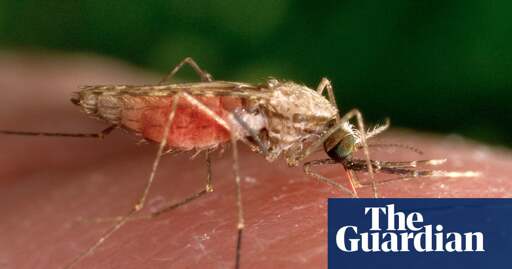
Oh I see, sorry - in this case it’s a matter of training, not breeding, so that’s not really a concern. Unless they develop some kind of extremely high-pitched mosquito language… that would be a problem.
That’s why it was a joke, but we still don’t know everything about epigenetics, so in theory it could be possible.
That is absolutely true, we really know very little about epigenetics.
That said, we do know that it’s really not a 1 to 1 logical connection between an organism’s experience and the epigenetic change to their DNA.
For example of an epigenetic change, improper nutrition at a particular point in an organism’s development could lead to a certain disease susceptibility that could persist for several generations. So what’s the link between nutrition and that particular disease? There isn’t one. It was likely just that the necessary proteins for DNA replication weren’t all present in a cell (due to the nutrition deficit), but the resulting DNA was “good enough”, so it still got used and copied.
All that is to say, it doesn’t work like “this organism learned something, and that knowledge or instinct gets passed down”. It tends to be more like, this organism’s body was under some specific pressure, or lived in some specific environment for an extended period, and the resulting effect is mostly unrelated and mostly unpredictable.
Those are just the examples we have found in humans, but epigenetics is certainly studied as a way organisms pass specific traits on to their offspring, for example:
Yes, if an epigenetic mutation occurs, that is indeed passed down to offspring, I hope I didn’t imply otherwise above. (Although as far as we can tell, the mutation is temporary and tends to be “corrected” within a few generations.)
All I’m really saying is that the trait acquired is not likely to have an effect in any way correlated to specific pressure that caused the mutation. For instance, exposure to a specific toxin could possibly catalyse an epigenetic mutation, but that mutation is highly unlikely to be a resistance to that toxin.
The journal article you linked seems like a great source! But I didn’t see anything that contradicted what I said above.
I reacted mostly to this part:
Where it seemed like you meant specific “learned” traits in one generation are not passed down to offspring, which is contradictory to what is commonly believed by experts. In some occasions it works like you described, but not always. I’m not an expert on epigenetics or even genetics though. And like I mentioned, a lot is still unknown, so we can’t say anything with so much certainty.
Ah, I see. No I meant literally learned, like from training, like training a dog. Sorry for the misunderstanding.
In theory they could be reading everything you’re typing right now. Better not give them any ideas